

Key Takeaways:
- Cost vs. Long-Term Health: Traditional dentures are a highly cost-effective starting point, but they rest on the gums and can lead to progressive jawbone loss over time.
- Lower Jaw Stability: Snapping a lower denture onto just two dental implants instantly stops shifting and slipping, eliminating the most common frustration of denture wearers.
- Upper Jaw Freedom: Using four dental implants on the upper jaw allows us to completely open up the roof of the mouth, giving you back your ability to fully taste food and feel its temperature.
- Mild Recovery: Implant surgery only causes about two days of mild soreness, and you can comfortably wear your existing dentures during the three-month healing process.
If you are missing most or all of your natural teeth, choosing the right restoration can feel overwhelming. When weighing dentures vs dental implants, it is important to understand how each option impacts your daily life, your oral health, and your budget.
At Premier Prosthodontics our board certified prosthodontist, Dr. Hugh Murphy, helps patients navigate these permanent tooth replacement options every day. Whether you are currently frustrated with a slipping denture or exploring your options for the first time, here is what you need to know to make the best choice for your smile.
The Reality of Traditional Dentures
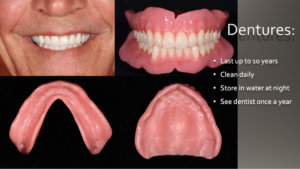
Traditional dentures remain a highly popular and great alternative for cost-based reasons. They quickly restore the appearance of your smile and provide basic chewing function.
However, they do come with long-term challenges. When teeth are missing, the jawbone undergoes progressive bone loss over time. As the jawbone shrinks, the denture begins to loose stability and retention. This process varies from person to person, but it often leads to discomfort, frustration, and the need for frequent (and sometimes costly) relines and adjustments.
The Game-Changer: Upgrading to Implant-Supported Dentures
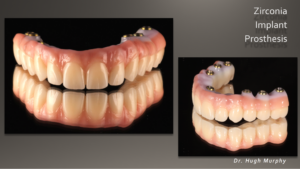
If you already wear dentures and find yourself frustrated by slipping, clicking, or dietary restrictions, you don’t have to start from scratch. Dental implants can be used to dramatically enhance your existing or new dentures.
When comparing a full arch implant vs traditional denture, the addition of implants provides life-changing stability and vastly improves what you are able to eat.
The Lower Jaw: Overcoming Frustration
Lower dentures are notoriously the most frustrating thing for tooth-loss patients because they constantly shift and float over the gums. Fortunately, the lower anterior (front) jaw is usually the first place we look to place implants. By placing just two dental implants in the lower jaw, we can snap the denture securely into place, greatly improving its function and eliminating that daily frustration.
The Upper Jaw: Tasting Your Food Again
A traditional upper denture covers the entire roof of your mouth (the palate). This severely dulls your sense of taste and prevents you from feeling the temperature of your food.
By placing four implants in the upper jaw, we can completely open up the roof of the mouth. The results are immediate and profound:
- Taste and Temperature: You will finally be able to taste your food fully again—and you’ll know your pizza is too hot before you burn your mouth!
- No More Sticky Situations: Foods like soft bread, hotdog buns, etc. notoriously stick to the acrylic palate of traditional dentures. Opening up the roof of the mouth eliminates this annoying problem entirely.
The Healing Process: Easier Than You Think
Many patients worry about the surgery, but the recovery process is highly manageable.
- Minimal Discomfort: Most patients only experience mild soreness for about two days following implant placement.
- No Toothless Days: You can continue to wear your traditional dentures while you heal.
- Timeline: The implants fuse with your natural bone over the course of about three months. Once healed, your dentures will be securely attached to the implants for maximum stability.
Frequently Asked Questions (FAQ)
To help you make an informed decision, here are answers to the most common questions we hear at Premier Prosthodontics:
Are dental implants better than dentures?
From a functional and health perspective, yes. Implants preserve your jawbone, prevent painful bone compression, and allow you to eat whatever you want. However, traditional dentures remain a viable and excellent cost-based alternative for those on a strict budget.
What is the difference between implants and partial dentures?
A partial denture rests on top of your gums and clasps onto remaining natural teeth for support. A dental implant, on the other hand, is a titanium post surgically placed into the jawbone to act as an artificial tooth root, making it much more secure and protective of your long-term bone health.
How long do implant-supported dentures last?
The titanium dental implants themselves are designed to last a lifetime with proper oral hygiene. The acrylic denture that attaches to them is highly durable but may need to be replaced or adjusted every 10 to 15 years due to normal wear and tear.
Which is better: dentures vs implants for seniors?
Age is rarely a limiting factor for dental implants. For seniors, the ability to eat a nutrient-rich diet safely without the choking hazards of slipping dentures makes implant-supported options highly recommended.
|
Traditional Dentures |
Implant-Supported Dentures |
|
|
Stability & Fit |
Can shift, click, or slip; relies on adhesives |
Securely anchored; snaps tightly onto implants |
|
Sense of Taste & Heat |
Upper palate covered; dulls taste & temperature |
Palate left open (4 upper implants); full taste restored |
|
Impact on Jawbone |
Leads to progressive bone loss & compression |
Preserves natural jawbone density & facial structure |
|
Dietary Freedom |
Sticky/soft foods (bread, hot dogs) stick or loosen fit |
Eat tough, hot, or sticky foods with confidence |
|
Healing & Timeline |
Immediate placement after impressions |
~3 months healing (wear existing dentures while healing) |
|
Cost & Longevity |
Lower upfront cost; requires periodic relines |
Higher initial investment; long-term permanent solution |
What is the implant-supported dentures cost?
While the upfront cost of implant-supported dentures is higher than traditional dentures, they are a long-term investment. Because traditional dentures accelerate bone loss and lead to ongoing costs for relines, adhesives, and replacements, implants often prove to be a more cost-effective and physically comfortable solution over a lifetime.
 Dr. Hugh Murphy