
Key Takeaways: A Quick Summary
- Beyond “Routine” Care: A general dentist is your primary care provider for cleanings, checkups, and fillings; a prosthodontist is a specialized dental architect dedicated to complex restoration, biomechanics, and comprehensive aesthetics.
- Rapid Tooth Wear & Bite Collapse: If your teeth are getting noticeably shorter, chipped, or thinned due to severe enamel erosion or grinding, fillings will not hold. Rebuilding collapsed bites requires advanced prosthodontic rehabilitation.
- The Aesthetic Zone: Any procedure involving missing front teeth, anterior dental implants, congenitally missing teeth, or full smile makeovers demands the precision of a specialist to achieve natural symmetry and long-term stability.
- Collaborative Care for Complications: Prosthodontists routinely solve complex clinical challenges (such as sheared implant screws or failed past dental work) while partnering directly with your dentist.
A common misconception in dentistry is that you only need a specialist when something has gone catastrophically wrong. While prosthodontists certainly handle emergency trauma and failed procedures, seeking a specialist is not about reacting to a worst-case scenario, it is about choosing a higher standard of care for complex, delicate, or high-stakes oral health needs.
At Premier Prosthodontics, Dr. Hugh Murphy is a Board-Certified Prosthodontist, Diplomate of the American Board of Prosthodontics, and an adjunct clinical professor at UNC-Chapel Hill. Combining extensive specialty training with an artistic eye, Dr. Murphy handcrafts bespoke restorations in our in-house dental laboratory.
If you are wondering whether your dental concerns can be managed by your family dentist or require specialty care, here is what you need to know about when to see a prosthodontist.
When Front Teeth Wear Down: Erosion, Grinding, and Bite Collapse
Many patients schedule an evaluation because they look in the mirror and ask: “Why are my front teeth getting shorter?”
Teeth do not naturally wear down to flat, uneven nubs overnight. When you notice sharp edges, worn indentations on the biting surfaces, or a smile that appears prematurely aged, you are likely experiencing advanced structural damage. Identifying rapid tooth wear causes early is critical to saving your natural teeth:
- Acid Reflux and Enamel Erosion: Chronic gastric acid from GERD, silent reflux, or highly acidic diets dissolves mineral-rich enamel from the inside out, weakening the backs of upper front teeth until they chip and thin.
- Bruxism and Clenching: Intense nighttime grinding exerts hundreds of pounds of pressure per square inch. Over years, this mechanical friction grinds down protective enamel and exposes the softer, yellowish dentin underneath.
- Bite Collapse: When the back molar teeth wear down or go missing, the entire lower jaw closes closer to the nose than it should. This loss of vertical dimension forces front teeth to absorb excessive, unnatural collision forces, resulting in rapid breakdown.
Can Enamel Loss Cause Bite Collapse?
Yes. When enamel wears away across multiple teeth, the height of your bite decreases. This can cause muscles to fatigue, strain the jaw joints (TMJ), and leave you with severely worn down front teeth.
For patients searching for severe enamel erosion treatment or worn down front teeth options, general dentists often attempt to patch these chips with resin bonding or single crowns. Unfortunately, if the underlying bite height is collapsed, isolated fillings will repeatedly crack and pop off. Resolving this damage requires a specialist trained in full-mouth biomechanics to orchestrate a full mouth crown restoration, safely opening your bite back to its proper anatomical height and restoring both chewing power and facial harmony.
Extensive Smile Makeovers and the “Aesthetic Zone”
A true smile makeover is not just placing a couple of cosmetic veneers on two front teeth. A smile makeover involves redesigning everything on display: analyzing how your teeth, lips, facial contours, and gums interact whenever you speak, smile, or laugh.
Specialty prosthodontic care is essential in situations such as:
- Anterior Dental Implants: Placing an implant in the front of your mouth requires sub-millimeter precision. Because bone and gum tissue are remarkably thin in the front smile zone, even a minute error in angle or depth can leave gray metal visible or cause irregular gum recision.
- Congenitally Missing Teeth (Hypodontia): Teens and adults born without certain permanent adult teeth (frequently maxillary lateral incisors) need sophisticated multidisciplinary care involving bridges, implants, or veneers to balance proportions naturally.
- Transitioning Out of Natural Teeth: Deciding when natural teeth can no longer be predictably maintained (and planning the transition to implant-supported arches) requires an overarching restorative roadmap rather than piecemeal treatment.
Trauma, Accident Reconstruction, and Redoing Past Work
Dental trauma often happens in an instant, a chip from a skateboarding fall, sports impact, or facial injuries from an auto accident. When a case involves structural facial trauma or repairing old restorations that have failed over time, general dentists routinely recognize that the technical challenges are extreme.
Clinical Case Study – A Perspective: One of our patients was involved in a severe car accident during high school and spent years without her natural front teeth. A previous dentist placed a large bridge that incorporated artificial pink acrylic to mask missing gum tissue. Because the tissue contours and tooth dimensions were not managed properly, the bridge looked unnatural and drew unwanted attention to the trauma area. In complex aesthetic challenges like this, inexperienced intervention can easily make the underlying defect worse. Dr. Murphy performed an aesthetic reconstruction: removing the bulky pink bridge, naturally reshaping the soft tissue, placing bespoke veneers, and professionally whitening the surrounding teeth to achieve a seamless, lifelike smile.
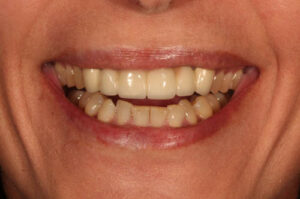
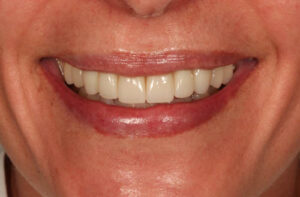
If you have undergone extensive restorative work in the past that is now deteriorating, cracking, or causing persistent discomfort, a prosthodontist is uniquely trained to safely deconstruct that work and build a stable, long-lasting foundation.
How We Collaborate with Your General Dentist
Choosing a prosthodontist does not mean leaving your trusted family dentist! General dentists frequently refer their most technically challenging cases to Dr. Murphy, trusting our practice to execute high-difficulty procedures while maintaining a collaborative relationship:
- Broken Implant Abutment Screws: Every dental implant has a titanium post, an abutment, and a small internal screw holding the restoration together. When an implant screw fractures deep inside the fixture, removing the broken fragment without ruining the internal implant threads requires microsurgical instruments and high-level training. General dental offices frequently refer patients to us for delicate screw retrieval.
- Active Communication: When a patient is referred to our office, we send detailed clinical treatment notes, share high-resolution imaging, and speak with the referring dentist directly.
- Patient Autonomy: Once a mechanical complication is resolved, we always ask the patient whether they prefer our office to craft their final restoration or return to their general dentist to complete the final crown.
Precision for Discerning Patients and Dental Anxiety
Two specific patient groups benefit immensely from a specialist’s office:
- Detail-Oriented Patients: If you have exacting aesthetic expectations and want total control over the shade, translucency, texture, and characterization of your smile, working with a prosthodontist who designs custom ceramics in an in-house laboratory ensures your aesthetic goals are met without compromise.
- Patients with Dental Fear: Many people develop severe dental phobia after traumatic past procedures, ill-fitting appliances, or repeated treatment failures. Because prosthodontists focus exclusively on advanced restorations, our clinic is structured to provide unhurried appointments, clear treatment planning, and gentle care that restores confidence alongside function.
General Dentist vs. Prosthodontist: A Quick Comparison
|
Focus Area |
General Dentist |
Board-Certified Prosthodontist |
|
Primary Scope |
Preventative checkups, routine cleanings, basic fillings, single crowns, routine extractions |
Complex oral reconstruction, full mouth restorations, bite collapse, smile makeovers, dental implants |
|
Post-Doctoral Education |
4 years of dental school |
4 years of dental school plus 3 additional years of ADA-accredited specialty residency |
|
Bite & Biomechanics |
Standard occlusal adjustments |
Advanced rehabilitation of vertical dimension, severe wear, and TMJ dynamics |
|
Aesthetic Zone Precision |
Standard lab-outsourced crowns and veneers |
Custom-crafted restorations designed for delicate tissue contours and optimal natural light transmission |
|
Complication Management |
Identifies issues and refers out complex mechanical failures |
Resolves broken implant hardware, revision cases, and congenital dental defects |
Reclaim Your Smile’s Form and Function
Whether you are struggling with worn-down teeth, dealing with an unexpected dental injury, or planning a transformative smile makeover, you do not have to guess about the best path forward.
Dr. Hugh Murphy and the team at Premier Prosthodontics in Raleigh are here to provide the specialized expertise, advanced technology, and personalized care your smile deserves. Contact our office today to schedule your comprehensive consultation.
Contact Premier Prosthodontics today to schedule your consultation and find out which tooth replacement option is right for you!
