Hypodontia Treatment in Raleigh by a Specialist

Causes, Symptoms, and Modern Solutions

Rather than being lost to injury or decay, sometimes teeth are never formed. This common condition is called Hypodontia (or congenitally missing teeth), it is a highly treatable condition, and it’s one Dr. Murphy has treated on numerous occasions.

Prosthodontists are often called on for treating cases of hypodontia as they involve complex bone density issues and spatial management that require a specialist’s training.

As a board certified prosthodontist, Dr. Murphy works in close collaboration with our patients’ orthodontists to design a treatment plan that grows with our patients. 

Eat without restrictions, speak with clarity, and laugh without hesitation
What Are Congenitally Missing Teeth?

The three categories

Hypodontia is the most common category of congenitally missing teeth. This is a case where the patient is missing 1-6 teeth, and in the United States (according to the Cleveland Clinic) occurs between 2% to 8% of the general population. Common occurrences are individuals that are born without lateral incisors

Oligodontia is the missing of more than 6 teeth and is less common than hypodontia. According to a study by the National Institute for Health, the frequency of oligodontia in the study group was 4.34%.

Anodontia is a genetic disorder defined as the absence of all teeth (teeth agenesis). Incidents of anodontia are thought to appear in less than 1% of the U.S. popoulation.

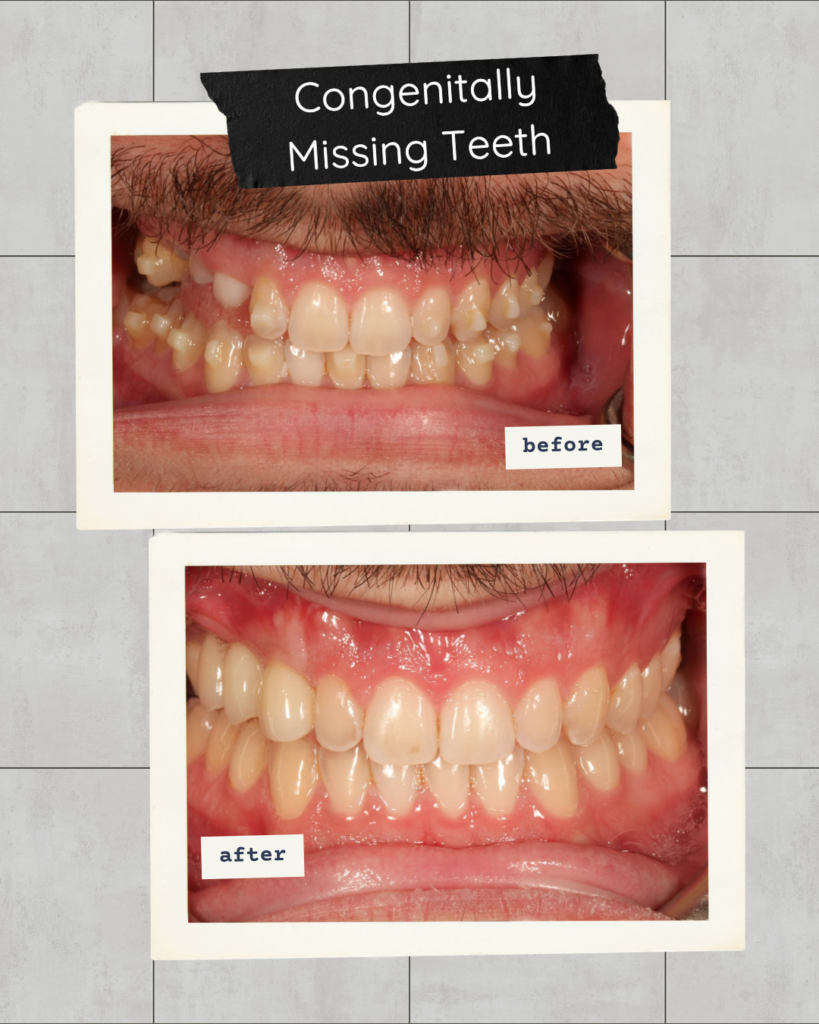
A detailed 'before and after' dental transformation comparison presented in two vintage-style polaroid frames. Top photo shows gapped, uneven natural teeth with labels for "Congenitally Missing Teeth". Bottom photo shows a complete, aligned, prosthetic smile with uniform teeth. Both against a light grey tiled background.
A medium close-up photo of a smiling young teenage boy with messy brown hair, wearing a green hoodie and grey t-shirt, who is missing some front upper teeth, standing in an outdoor autumnal park.

Why Does Hypodontia happen?

Hypodontia often occurs because of a problem with development, rather than trauma. What we do know is that genetics plays a strong role, as hypodontia tends to run in families.

The condition may occur alone or as part of a syndrome that causes other physical abnormalities like cleft lip/palate, down syndrome, or ectodermal dysplasia.

Hypodontia Signs & Symptoms to Look For

If your toddler’s adult teeth are not coming in and you have a family history of Hypodontia then be on the lookout for: 

  • Gaps or “diastemas” that don’t close naturally.

  • Baby teeth that don’t fall out when they should (over-retained).

  • Existing teeth that look “peg-shaped” or unusually small.

  • Difficulty chewing or clear speech impediments

The phases of treating hypondtia

Q: Why can’t we implement a permanent solution right away?

A: These solutions require a fully developed jaw (ages 18-21)

Permanent solutions like implants require a patient to have a fully developed jaw, which doesn’t usually happen until a patient is 18-21 years old. Premier Prosthodontics works with parents and their orthodontists to fill the gaps during the middle and high school years.

In-House Lab Advantage: Because the teeth are congenitally missing and the surrounding bone is often thin, having a doctor who hand-crafts the restorations in-house throughout every phase, ensures a more precise fit.

Hypodontia Treatment options & Restoring Smiles

First Phase: Preparation Through Orthodontics

A prosthodontist and a periodontist work in a tightly coordinated loop when treating hypodontia. Orthodontists prepare the site or locations, and the prosthodontist creates and attaches first the temporary and later the permanent solutions.

We always start with the finish in mind. Premier Prosthodontics determines where the final teeth should ideally sit for the best aesthetics and bite.

  • Digital Wax-ups: Our office creates a digital or physical model of the “ideal” smile.

  • The Blueprint: Based on this model, we work with your orthodontist on exactly where the existing teeth need to be moved in order to create the perfect amount of space (measured down to the half-millimeter) for implants or bridges.

The orthodontist then uses either braces or Invasalign to move the teeth according to the blueprint both teams and your family agreed upon.

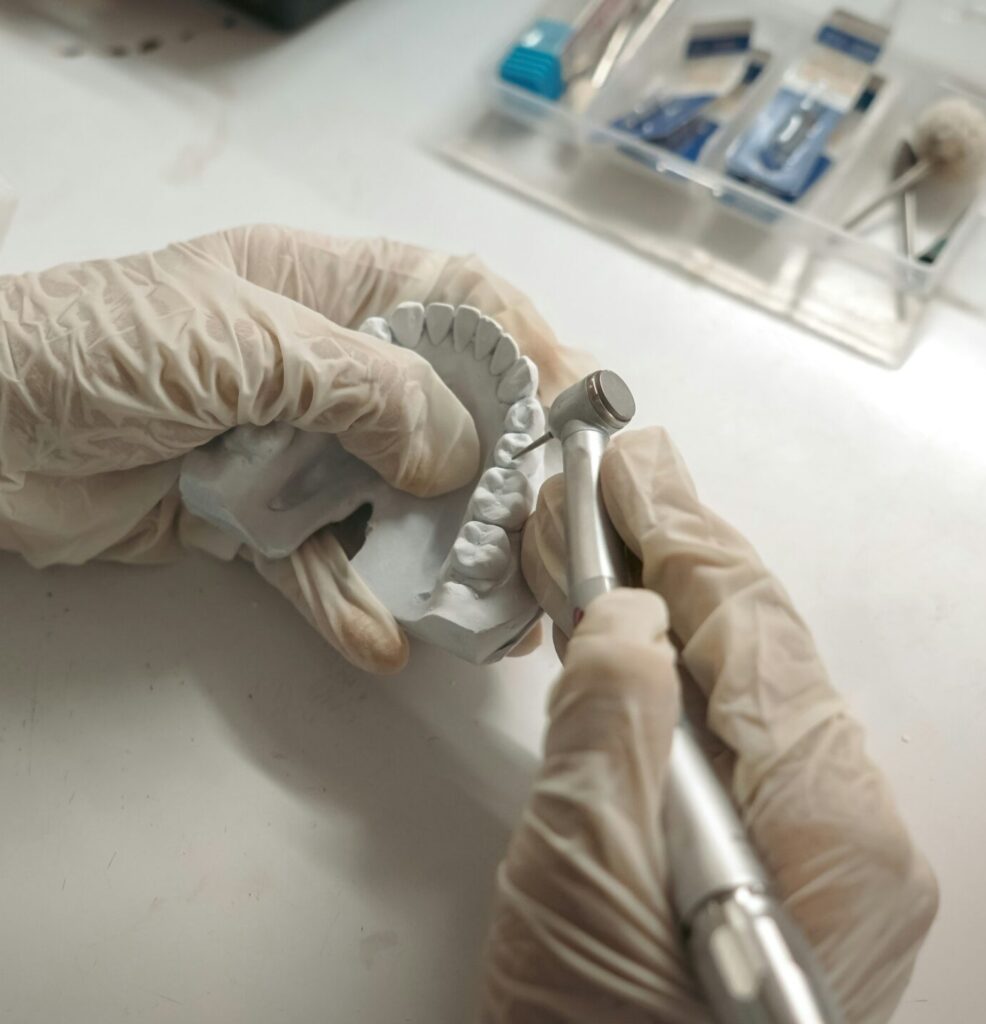
A close-up shot of Dr. Murphy's gloved hands using a precision dental tool to hand-finish a detailed, cream-colored 3D-printed dental model, representing a custom restorative plan for a patient with multiple missing teeth (hypodontia). A tray of dental tools is in the background.
Second Phase: Temporary fixes
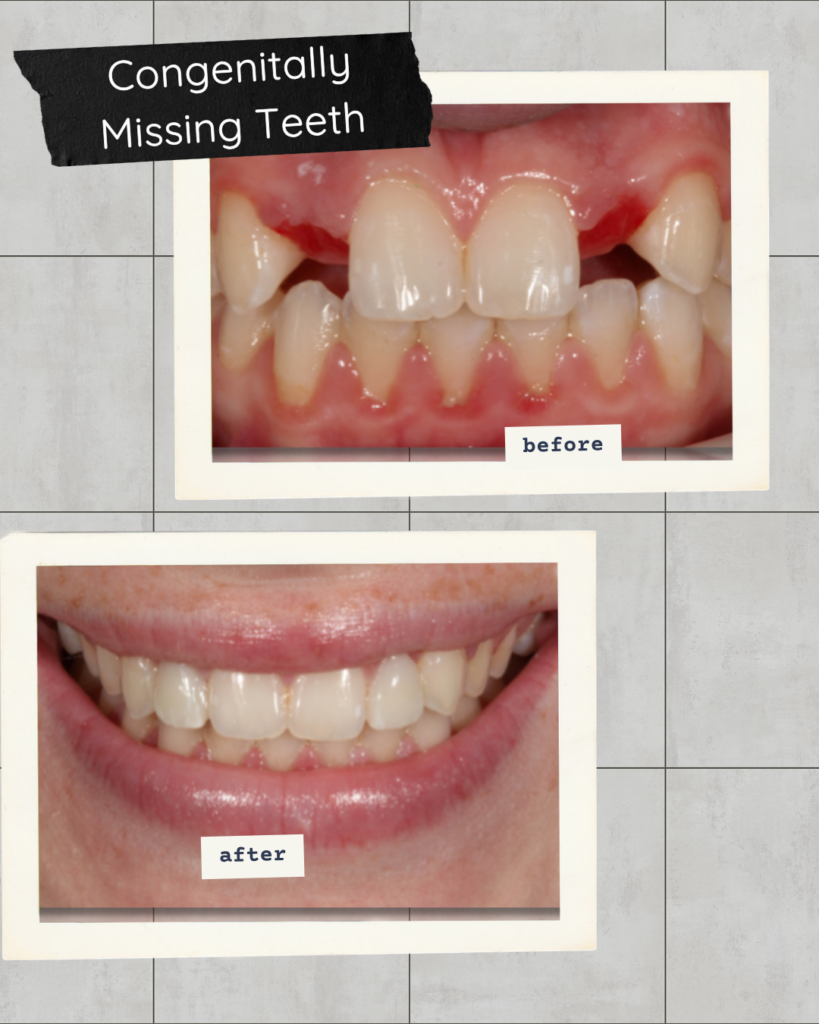
A side-by-side comparison image showing a dramatic dental transformation. The top image is a close-up labeled 'before', showing misaligned teeth with visible gaps and inflamed red gums. The bottom image is a close-up labeled 'after', featuring a full, bright, and natural-looking smile with healthy gums and no gaps, illustrating successful prosthodontic restoration.

Orthodontics can take 18–24 months so during this time, we  ensure the patient doesn’t have to walk around with visible gaps.

There are a lot of ways to fill in the gaps 

  • Pontics are “fake” teeth crowns that are attached directly to the orthodontic wire.

  • Temporary Bridges: As the teeth reach their final positions, the prosthodontist may provide a “flipper” or a Maryland bridge to maintain the space while the patient waits for dental implants or for jaw growth to finish (usually age 18–21).

Once the braces are removed, the patient is often too young for permanent implants. Our office will then create “Aesthetic Space Maintainers”—retainers with “fake” teeth attached—to keep the gaps open and the smile looking full until the patient reaches adulthood.

Third Phase: Permanent fixtures

This is it! This is the “Definitive Restorative Phase” and it involves the permanent replacement of the missing teeth.

While it can be frustrating to wait until adulthood for a permanent solution, Phase 3 is timed with the patient’s skeletal maturity. Placing an implant too early can lead to complications, as the implant will not move while the rest of the natural teeth continue to shift with jaw growth.

Common restorative solutions to expect during this phase:

  • Dental Implants: Placing titanium posts in the jawbone to act as roots, followed by custom crowns.

  • Bridges: Bonding a prosthetic tooth to the adjacent natural teeth.

  • Composite Bonding: Reshaping existing teeth (like turning a pointed canine into a lateral incisor) to fill gaps aesthetically.

  • Permanent Dentures: In more severe cases (oligodontia), creating a high-quality removable or fixed-hybrid prosthesis.

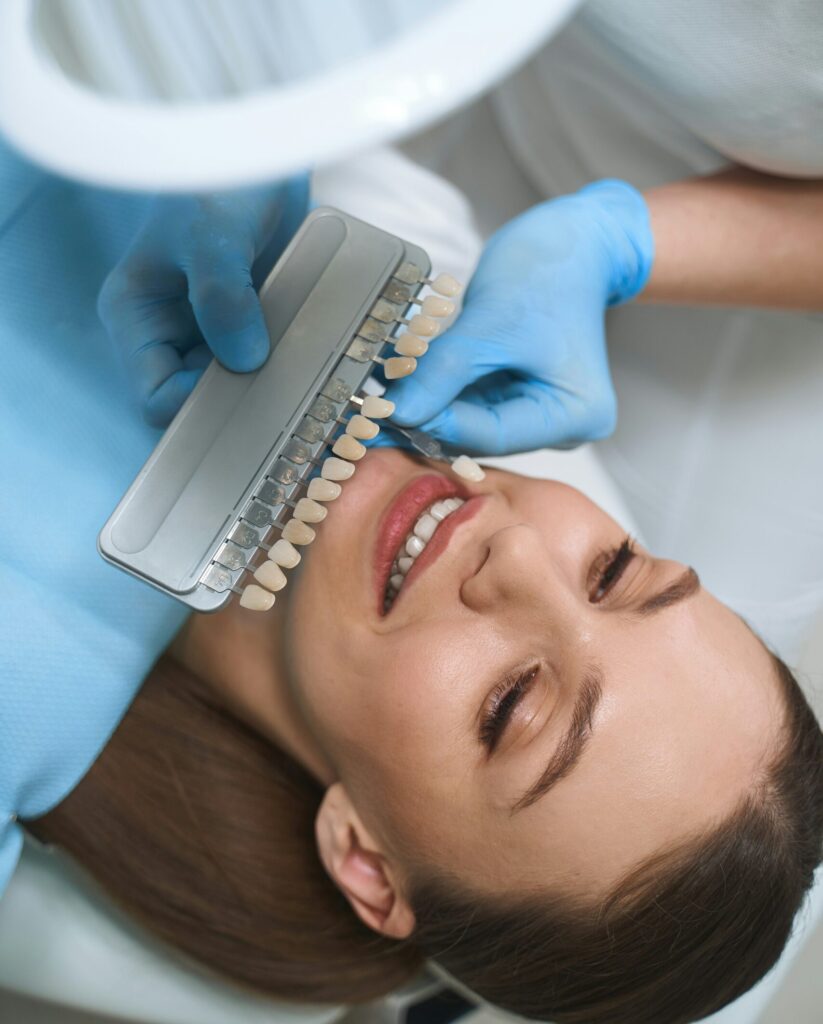
A top-down view of a smiling patient at Premier Prosthodontics while Dr. Murphy uses a tooth shade guide to select the perfect natural color match for final dental implants and restorations.

A Journey Worth Taking—Together

We understand that treating hypodontia is a marathon, not a sprint. It requires years of planning, patience, and coordination between specialists. But a long process doesn’t have to be a difficult one.

At Premier Prosthodontics, we specialize in the “final piece of the puzzle.” Our team provides the expert restorative care and unwavering support you need to transition from orthodontic preparation to a permanent, beautiful smile. From your first consultation to your final restoration, we ensure you are never navigating this path alone.

Ready to see what’s possible for your smile? Call the number below to schedule your consultation visit!